





Charlie Parr
- Doors
- 6 pm
- Show
- 7 pm
- Ages
- 21+
Description
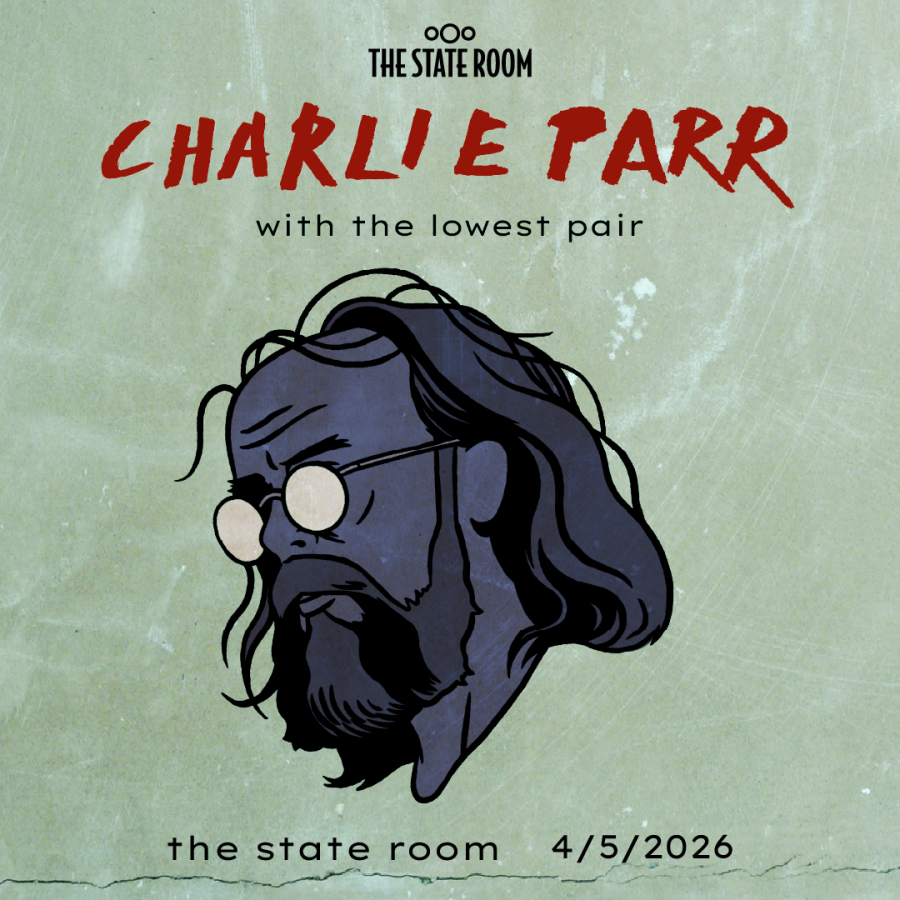
Charlie Parr
In the music of Charlie Parr, there is a sincere conviction and earnest drive to create. The Minnesota-born guitarist, songwriter, and interpreter of traditional music has released 19 albums over two decades and has been known to perform up to 275 shows a year. Parr is a folk troubadour in the truest sense: taking to the road between shows, writing and rewriting songs as he plays, fueled by a belief that music is eternal and cannot be claimed or adequately explained. The bluesman poet pulls closely from the sights and sounds around him, his lyrical craftsmanship built by his influences. The sounds from his working-class upbringing—including Folkways legends such as Lead Belly and Woody Guthrie—imbue Parr’s music with stylistic echoes of blues and folk icons of decades past. Parr sees himself merely as a continuer of a folk tradition: “I feel like I stand on a lot of big shoulders,” he said in an interview. “I hope that I’ve brought a little bit of myself to the music.”
With a discography simultaneously transcendental in nature and grounded in roots music, Charlie Parr is the humble master of the 21st century folk tradition. Parr started recording in Duluth in 2002, where he lives today. Life in the port town on Lake Superior has a way of bleeding into his work the same way his childhood in Austin, Minnesota does. Parr self-released his debut album, Criminals and Sinners, and did the same for his sophomore album 1922 (2002). With growing popularity abroad, Parr signed with Red House Records in 2015, where he recorded break-out albums Stumpjumper (2015) and Dog (2017). Parr’s music has an overwhelming sense of being present and mindful, and his sound is timeless.
Parr’s mastery of his craft is only more apparent when contextualized within the history of folk tradition of which Parr has dedicated his practice The land and lives around and intersecting with Parr have always influenced him, from the hills and valleys of Hollandale, Minnesota to the Depression-era stories from his father. Parr strives to listen to everything: “I don’t see that I’d ever be capable of creating anything if it weren’t for these inspirations and influences, books and music as well as the weather and random interactions with strangers and animals. So, the well never runs dry as long as my eyes and ears are open,” Parr said in a 2020 interview. Before he was even 10 years old Parr was rummaging through his father’s record collection—sometimes drawing dinosaurs on the vinyl sleeves—and listening to country, folk, and blues legends, many of whom are staples in the Folkways catalog. When Parr sings and plays his resonator or 12-string, you can hear influences like Mance Lipscomb, Charley Patton, Spinder John Koerner, Rev. Gary Davis, and Dock Boggs. This is especially true in his playing, when, after a diagnosis of focal dystonia, Parr turned to greats like Davis, Doc Watson, and Booker White for two-finger picking inspiration. Gifted a 1965 Gibson B-45 12-string by his father, Parr has never had a formal lesson and learned by to listening records and watching musicians he admired.
Parr’s first album with Smithsonian Folkways, Last of Better Days Head (2021), foregrounded his lyrical craftsmanship and sophisticated bluesman confidence, with spare production highlighting Parr’s mastery of guitar and elevating his poetry. Last of Better Days Ahead is a portrait of how Parr saw the world in that moment, reflecting on time and memories that have past while holding an enduring desire to be present. In his 2024 release, Little Sun, Parr weaves together stories celebrating music, community, and communing with nature. Putting forth an ambitious and raw album that exemplifies the best of Parr's sound: a blend of the blues and folk traditions he continues to carry with him and the steadfast originality of a poet.
The Lowest Pair
The Lowest Pair has questions. The duo, made up of Kendl Winter and Palmer T. Lee, know that we tend to see duality as a problem. We want life to be linear, working through the dark to finally get to the light. Grief to joy, despair to hope, confusion to clarity––not a jangly cycle we can’t escape. But through their incandescent folk songs, the Lowest Pair often ask: What if we sit with the mess? What if that’s not just more peaceful, but more magical, too?
“Fare thee well and go to hell, I love you and I’m mad at you. It’s such a theme in my life,” Winter says, then laughs. “Wishing things were different but loving all of it, too.”
On their 8th album Always As Young As We’ll Ever Be, the Lowest Pair prove that over the last dozen years together, they’ve become some of modern roots music’s most mesmerizing, thoughtful purveyors. Produced by Tucker Martine (The Decemberists), the 10-track album puts the duo’s stark lyricism, string-driven arrangements, and raw compatibility on brilliant display.
“We’re both trying to make space for each other rather than crowd each other out,” Lee says, reflecting on why the Lowest Pair works. “We’re doing a lot of listening and reacting to what the other person is doing.” Lee’s speaking voice is a comforting echo of his singing voice, soft and precise. Winter talks like she sings, too, sweet and raspy. Heard together, the effect is both soothing and scintillating, like a crisp mountain stream smoothing rocks.
The Lowest Pair’s musicianship is another beautiful testament not just to playing that breathes, but playing that listens. Winter, who grew up in Arkansas but has lived in Washington State for the last two decades, and Lee, a Minnesota native, first gained attention as poetic singer-songwriters on banjos. While their family of strings has expanded––Winter plays more guitar on the new record than she ever has before––their fundamental approach hasn’t: Respond to sounds and stories the other is making.
That focus on active listening anchored the recording of Always As Young As We’ll Ever Be, too. After years of self-production and limiting instruments to those played by Winter and Lee themselves, the duo felt ready to collaborate with a bigger circle. In addition to Martine helming boards, musicians including Leif Karlstrom (fiddle), Sydney Nash (bass/piano) and Adam Roszkiewicz (guitar, mandolin, synth) joined the recording session. “It was really thrilling to be in the studio with that group because those are all really sharp listeners,” says Winter. “I love us stripped back. That’s the essence of our songs, but at this point, recording wise, I felt excited about letting somebody else paint with us.”
Lee agrees. “For example, J.T. Bates is fascinating as a drummer because he’s paying so much attention to lyrics and the story of the song.”
As a result, Always As Young As We’ll Ever Be pulses with life. Album opener “Give It All Away” glows warm and bright with strings and synths as Winter and Lee consider harsh seasons and humanity’s short memories. “It’s this idea of cycles and knowing there’s dark and light, and it’s going to change,” says Winter. “When it’s good, notice it. When it’s bad, know it’s going to change. I spend a lot of time reminding myself that––and still being surprised by it.”
Yearning “Diamonds” captures the hunt for connection and beauty with heart-pounding grace, while “The Uncertain Seas” rumbles through familiar feelings of doubt, frustration, and longing using spine-tingling vocals and a pop-ready hook. “It’s not knowing, but also trying to give up caring about knowledge,” Winter says. “Trying to be okay with being uncertain––when it’s so uncomfortable.”
With hypnotic charm, high-mountain strings, and a resolute chorus spurred by a chant, “What Is This” snakes through the turmoil of craving action but needing patience. “I’m trying to find the grace to let things unfold naturally,” Lee says. “Watching them unfold, not wanting to put a fingerprint on it.”
Vivid natural imagery recurs throughout Always As Young As We’ll Ever Be, sometimes as a metaphor, sometimes as a wild setting. “I’m obsessed with being outside,” says Winter. “Trails. Foraging. I’ll go run 20 miles through the mountains and come back with huckleberries and chanterelles. I love light––sunsets and the color changing. Ripples on water.”
Then, Winter points out that Lee is often found writing on a porch. “Yeah, I prefer to be outside when I’m writing,” he says. “I want the smells and the sounds.”
“Tiny Rebellions” is a stylistic jolt, punctuated by electronic flourishes and thundering percussion. Winter points to the song’s underlying hope. “It’s really knowing that anything is possible, and that bearing something is grief and joy––the flip sides of the heart,” she says. “There’s optimism, buried in the dark.”
Masterful “Quantum Physics” is a meditation, featuring stunning vocals that weave under and around each other like subatomic particles. Inspired by an On Being podcast episode that delved into concepts of time, Winter wrote the song to grapple with her own understanding of love and loss. “I lost my father to early onset Alzheimer’s in 2019. It was a 10-year battle,” she says. “The idea of all time existing––not necessarily being linear––makes me feel really good.”
Another vocal showcase moored to strings, “Casually Getting the Job Done” muses over what’s done but not said, while “Shitty Light” is a vulnerable reckoning with perspective and the past. “Spilled Beans” swings with boozy strings and saloon-worthy piano while weightier lyrics offer a sober counterpoint. “This one feels like a party––just passing around a bottle of something, leaning back and listening to the piano,” Winter says.
“I feel like it’s a nice juxtaposition,” says Lee of the song. “The verses are kind of heavy, and the chorus is too, but it’s still optimistic. And then, leaning into the party is the backdrop to the heaviness.”
Winter initially wrote album closer “Thorn” as an instrumental waltz. The song shimmers and sways, as the Lowest Pair takes a poetic trope and twists it into imagery that’s still familiar, but personal. It’s a signature send-off: somehow sad but hopeful, earnest and a little tongue-in-cheek.
“If I listen to somebody else’s record, it’s easy for me to have favorite songs, but if it’s something we’ve made, it’s about all the pieces being in relationship to the other pieces,” Lee says of the album. “It’s about being okay with the heaviness and seeing the light that’s associated with the darkness. I hope it helps people not feel alone in the heavy things.”
THE STATE ROOM
638 South State Street
Salt Lake City, Utah 84111
800-501-2885
Box@TSRPresents.com
THE COMMONWEALTH ROOM
195 West 2100 South
South Salt Lake, Utah 84115
800-501-2885
Box@TSRPresents.com
THE STATE ROOM PRESENTS
DEER VALLEY
LIVE AT THE ECCLES
FORT DESOLATION
OTHER ROOMS
Tickets online at AXS.comIn person at Graywhale
Box office open show nights
Are you in a local band and want to play one of our venues?
Fill out this form to be added to our local support pool!